Foraging Sloes, Haws and Rosehips: An Autumn Hedgerow Walk
October 10, 2026 - Outdoors

October 10, 2026 - Outdoors
October 09, 2026 - Outdoors
October 05, 2026 - Crafts

October 04, 2026 - Crafts
You do not need binoculars, a hide or any particular expertise to start identifying the birds in your garden. A window, a mug of tea and twenty quiet minutes will do. The trick is not to name everything at once, but to learn one bird properly — its markings, its call and what it does at the feeder — before moving on to the next.
Feathers lie. A wet blue tit looks drab, a young starling looks nothing like its parents, and a bird in deep shade loses every marking you thought you had learned. Behaviour stays much the same, so watch what a bird does before you worry about how it looks. Five details will identify most visitors:
Jot those down with the date and you will name most of your visitors inside a minute. A notebook by the window beats a phone every time.
These five make up the bulk of most garden sightings. Learn them first and everything else becomes easier by comparison.
The male has a grey crown and nape, a black bib under the chin and a chestnut-brown back. The female is plain buff-brown with a pale stripe behind the eye and no bib. Listen for a flat, repeated cheep, and a chattering chirrup from deep in a hedge. They feed in noisy gangs on the ground and on the table, squabbling constantly. Use them as your ruler: everything else is bigger or smaller than a house sparrow.
Black at a distance, glossy black with green and purple sheen up close, spangled with pale speckles in winter. The bill turns bright yellow in spring. The song is a jumble of whistles, clicks and impersonations. Starlings arrive in a crowd, empty a fat ball in minutes and shove smaller birds off the table.
Blue cap, white cheeks crossed by a dark line through the eye, yellow belly, blue-green wings. Rarely still for more than a second. The call is a high, thin tsee-tsee-tsee, with a scolding churr if you get too close. It hangs upside down on peanuts and fat balls, in and out of the feeder in seconds.
Black head, big white cheek patches, yellow belly with a black stripe down the middle. The ringing two-note teacher-teacher is one of the first songs of the year, often with a metallic ping alongside it. Bossy: it clears smaller birds off the feeder, takes a single seed and hammers it open on a branch.
The male is all black with a bright orange-yellow bill and eye-ring; the female is brown with a paler throat and faintly spotted breast. The song is fluty and unhurried, often from a rooftop at dusk, and the alarm is a loud chook-chook. It feeds on the ground, flicking through leaf litter, and will take berries, mealworms and windfall apples.
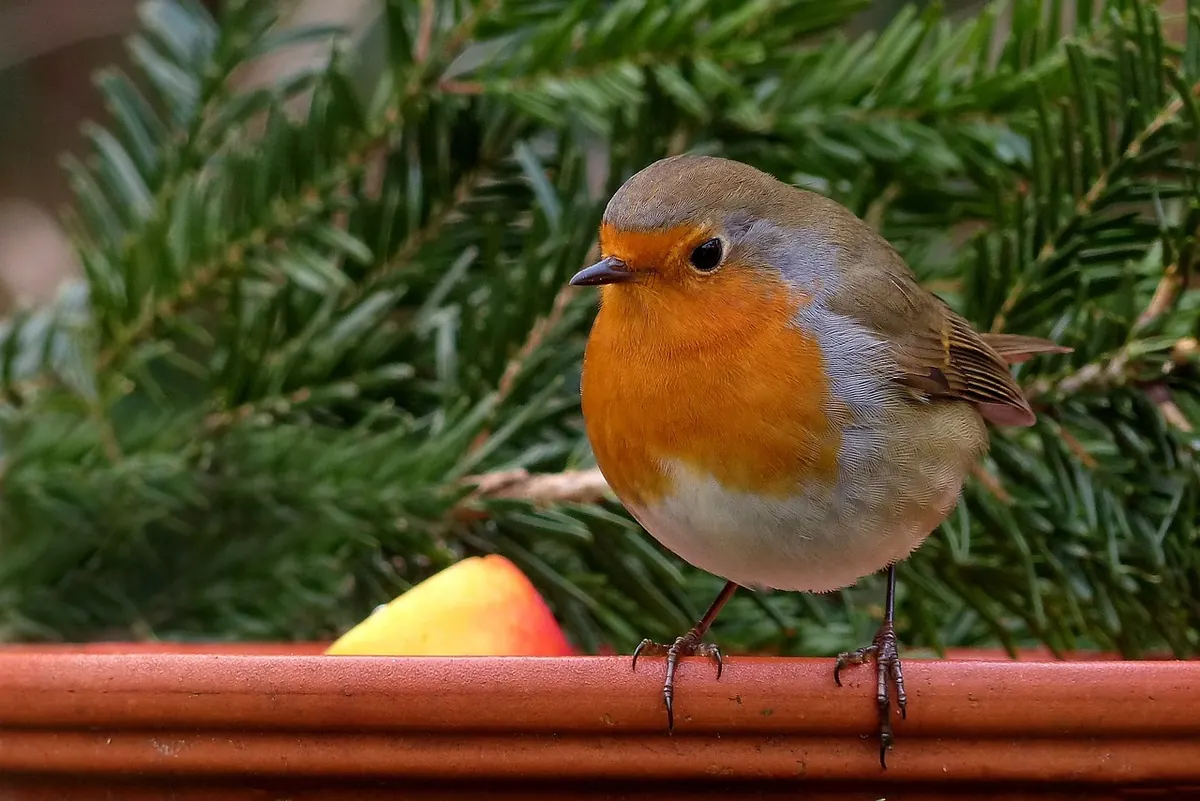
Round-bodied, brown above with an orange-red face and breast — males and females look much the same. It sings a thin, sweet warble right through winter and gives a sharp tick when disturbed. Often the first bird back after you refill, and bold enough to follow a spade around the border.
Red face, black-and-white head, a bright gold bar across the wing and a slim, pointed bill. The tinkling, liquid twitter usually reaches you before the birds do. Prefers nyjer and sunflower hearts, hangs neatly rather than clambering, and arrives in small charms of five or six.
Black cap with a white patch on the nape, grey-brown back and soft buff underparts. The call is a high, hurried see-see-see — thinner and faster than a blue tit's. It never lingers: it takes a seed, flies straight to cover to eat it, and hides spare food away for later.
A tiny round body with a tail longer than the bird itself, pinkish with black and white. They move through as a family party, calling see-see-see and a rolling tsirrup the whole way. Suet and peanuts are the draw, but they rarely stay more than a few minutes.
Large birds get dismissed as "just pigeons", which is a shame, because each one has an easy giveaway.
Wood pigeon — the biggest thing on the lawn, grey with a white patch on each side of the neck and white bars in the wing. Its rolling five-note coo is unmistakable. It grazes underneath the feeder and tidies up the spilt seed.
Collared dove — slimmer and paler, with a thin black half-collar at the back of the neck. Three notes, the middle one stressed: coo-COO-coo. Feeds on the ground.
Magpie and jackdaw — the magpie is black and white with a long tail and a harsh rattling chak-chak; the jackdaw is a small crow with a grey shawl at the nape and a pale eye, calling a clipped tchack. Both take peanuts, suet and scraps, usually in pairs.
Jay — shy, and usually heard before it is seen: a harsh screech from the trees. Pinkish-brown with a white rump and a blue flash on the wing. It will take peanuts and bury them in the lawn.
One identification trap: a quiet brown bird shuffling alone under the hedge, with a thin bill and a greyish head, is more likely a dunnock than a female sparrow. Sparrows are sociable; dunnocks are not.
Sound carries when birds do not show themselves. Put names to these and you will identify much of what you hear from indoors:
Copy this into the back of a notebook and add the date each time you spot one.
Identification gets much easier when birds feel safe enough to linger. A shallow dish of water, refreshed daily and with a stone in it for perching, will pull in more species than food alone in hot weather. Clean feeders every couple of weeks with warm soapy water, let them dry properly, and shift their position around the garden now and then so droppings and discarded husks do not build up in one spot.
Leave a corner untidy: ivy on a wall, a hedge, a small tree. Cover is what keeps birds in the garden long enough for you to look properly. Then start a simple record — the date you first hear a blackbird sing, the first goldfinch of the winter. After a year or two, those notes tell you more about your garden than any book can.
If the garden suddenly falls silent and every feeder empties at once, look up. A sparrowhawk is passing through — and that is worth the quiet.
One last suggestion: the RSPB's Big Garden Birdwatch runs each January, and spending an hour writing down everything you see is the fastest way to sharpen your eye. Use the tick list above as your practice sheet in the meantime.
Photo: Oldiefan / Pixabay
A seasonal guide to spotting sloes, haws and rosehips in British hedgerows, picking them without stripping the bush,...
Turn bamboo canes, bricks, logs and garden offcuts into a simple bug hotel that shelters bees, beetles and...
October 10, 2026 - Outdoors
October 09, 2026 - Outdoors
October 05, 2026 - Crafts
Copyright © 2026 Sprig Page. All Right Reserved.