Foraging Sloes, Haws and Rosehips: An Autumn Hedgerow Walk
October 10, 2026 - Outdoors

October 10, 2026 - Outdoors
October 09, 2026 - Outdoors
October 05, 2026 - Crafts

October 04, 2026 - Crafts
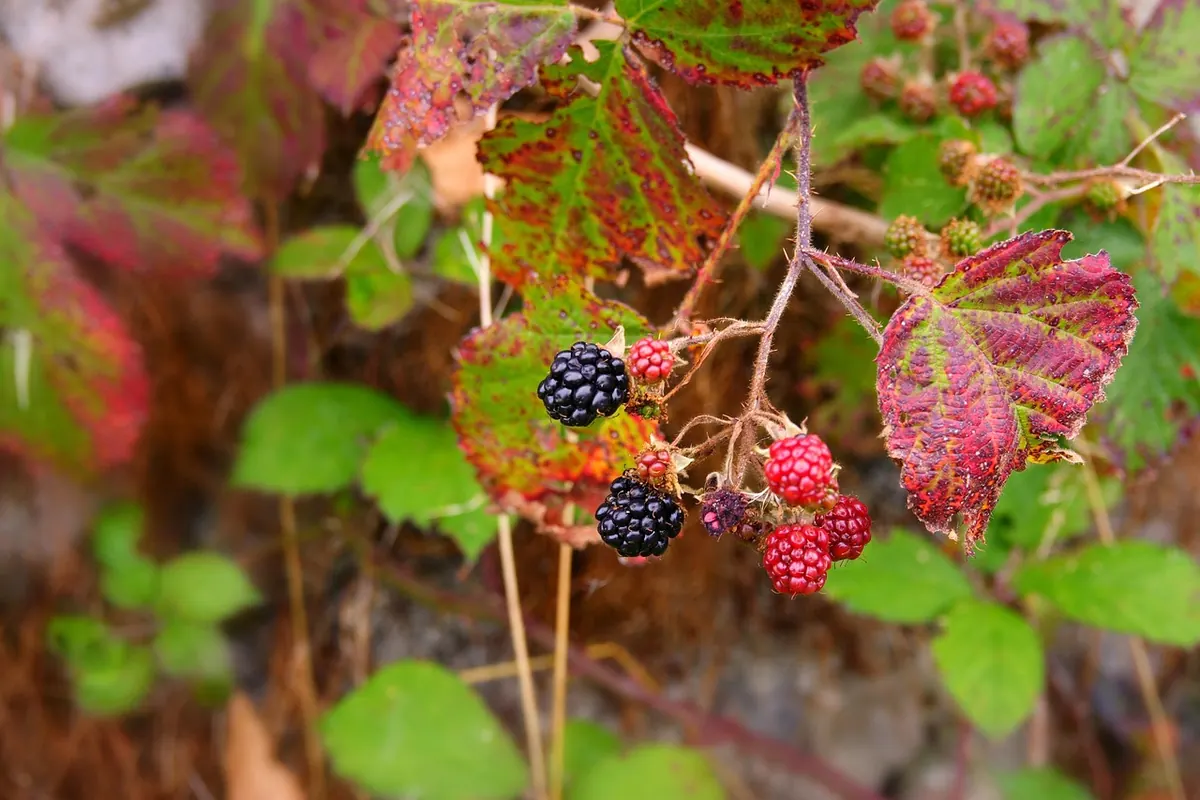
The hedgerow in late October plays the same trick every year. The leaves thin, the thorns show, and the fruit that was invisible all summer becomes the brightest thing in the lane. Walk the same footpath weekly and you will see it happen: blackthorn twigs bowed down with blue-black sloes, sprays of crimson haws, and the fat orange hips of dog rose arching out over the nettles.
Three fruits, three different jobs in the kitchen. All are common across Britain, none takes much skill to identify once you have seen them close up, and all have been picked rather than bought for centuries. What follows is the walk itself: how to tell each one apart, how to pick without stripping the hedge, and something straightforward to do with each when you get home.
Haws and hips colour up from late August and are at their best through September and October. Sloes follow from September and often hang on into November. Rosehips will stay on the bush into winter, but they soften and lose their bite, and many hedges are flailed from late autumn, so pick before the tractor reaches your stretch of lane.
On private land, ask. A hedge beside a public footpath usually belongs to the farmer whose field it borders, and although picking wild fruit and foliage for your own use is generally not treated as theft in England and Wales, that gives you no right to be on the land and certainly not to take commercial quantities. Uprooting plants is a different matter and is not permitted. Nature reserves, Sites of Special Scientific Interest and land owned by charities often have their own byelaws, so check first.
Sloes are the fruit of blackthorn (Prunus spinosa): round, roughly a centimetre across, blue-black with a soft grey bloom, sitting singly or in twos pressed tight against the wood rather than hanging in bunches. Each has a single stone. Bite one and you will know at once — the flesh is dry, sour and astringent enough to make your mouth feel like sandpaper.
The bush gives itself away: dense, dark, ferociously spiny twigs with small oval, finely toothed leaves. The main lookalikes are bullace and damson, both larger and both edible, so this is a safe family to learn. If the fruit is red, or the plant has needle-like leaves, walk on.
Sloes are inedible raw, which is why nearly every recipe begins with gin. Freeze them overnight to split the skins, then cover with sugar and gin — 500g of fruit, 250g of sugar and a litre of gin is a sensible starting point. Shake the jar every few days for the first month. It is drinkable by Christmas and much better the following autumn. The spent fruit can be strained off for jelly with apples, and sloes also make a sharp ketchup that suits game.
You will hear that sloes need a frost before picking. They need the skins softened, and a night in the freezer does the same job.
Haws are hawthorn berries (Crataegus monogyna): deep red, oval, about the size of a small pea, usually clustered and hanging below the twigs. Each holds a single hard stone, with a small dark drying tip where the flower was. The leaves are the giveaway — small, deeply lobed and toothed, bunched on short shoots. The twigs carry straight thorns a couple of centimetres long. Midland hawthorn has shallower lobes and two or three stones per berry; use it in exactly the same way.
Two red-berried plants nearby are worth ruling out. Rowan has pinnate leaves and berries in flat-topped clusters on a tree, not a thorny shrub. Yew has red, cup-like arils on dark needle leaves and a toxic seed. Hips and haws grow on thorny shrubs; yew never does.
Haws taste mealy and faintly sweet, with most of the flavour in the skin, so cook them. Simmer the berries with a splash of water until soft, push them through a sieve to leave the stones behind, then use the pulp in a ketchup or sauce with vinegar, a little sugar, black pepper and a clove or two. It is excellent with cold meat and cheese. Haws also make a fine hedgerow jelly mixed with apple, and the pulp dries well in a low oven as fruit leather.
Keep the seeds out of anything you intend to blend. Like many fruit stones, hawthorn seeds contain compounds that are not good for you in quantity, and the cooking and sieving above is designed to remove them.
Dog rose (Rosa canina) hips are oval to round, one to two centimetres long, and a glossy red-orange that stays vivid on bare stems long after everything else has gone over. The identifying detail is at the tip: a small cluster of dried brown sepals, like a tiny brush or star. The leaves are divided into five to seven toothed leaflets along a stalk, and the arching stems carry small curved thorns.
Pick hips that are firm and brightly coloured. Fruit that has been frosted and refrozen goes soft, and bruised or shrivelled hips are not worth carrying home.
The classic is syrup, and it is worth doing properly. Chop or roughly crush the hips, simmer them in water for twenty minutes, then mash and strain through a double layer of muslin or a jelly bag. Do not squeeze the pulp hard — the fine hairs inside a hip are a genuine irritant, once dried and sold as itching powder. Strain the liquid again, then boil it with sugar to make a syrup that keeps. During the Second World War, British children were given rosehip syrup as a source of vitamin C, and the method has not improved since.
Dried and chopped, hips make a decent tea, though the same rule applies: strain it well. Treat hips as something to cook and strain, never something to chew whole.
These fruits are not there for us. They are the winter larder for redwings, fieldfares, blackbirds, small mammals and the occasional hungry waxwing, so take a share rather than a harvest.
Start with one fruit, not three. If you are heading out this weekend, take a bag for hips, pick two or three handfuls, and make a single small jar of syrup. Next time, take sloes and start a bottle of gin for next winter. Then haws, when the flavour of a ketchup is worth the sieving.
Wash everything, discard anything mouldy, and label each jar with the date so you know how long it has been sitting. And if you are pregnant, breastfeeding, taking regular medication or have a known allergy, have a word with a pharmacist or your GP before trying a wild food for the first time — most hedgerow fruit is perfectly ordinary, but some can interact with medicines or upset a sensitive stomach. Then put your boots back on. The hedge has another six weeks of colour in it yet.
Photo: 2taol / Pixabay
A beginner's tickable guide to the most common UK garden birds, pairing each one's markings with its call and the...
Turn bamboo canes, bricks, logs and garden offcuts into a simple bug hotel that shelters bees, beetles and...
October 10, 2026 - Outdoors
October 09, 2026 - Outdoors
October 05, 2026 - Crafts
Copyright © 2026 Sprig Page. All Right Reserved.